
Your baby’s sleep position and environment are crucial to prevent SIDS (Sudden Infant Death Syndrome, also called cot death) Learn how to create a safe sleep environment to minimize your baby’s risk.
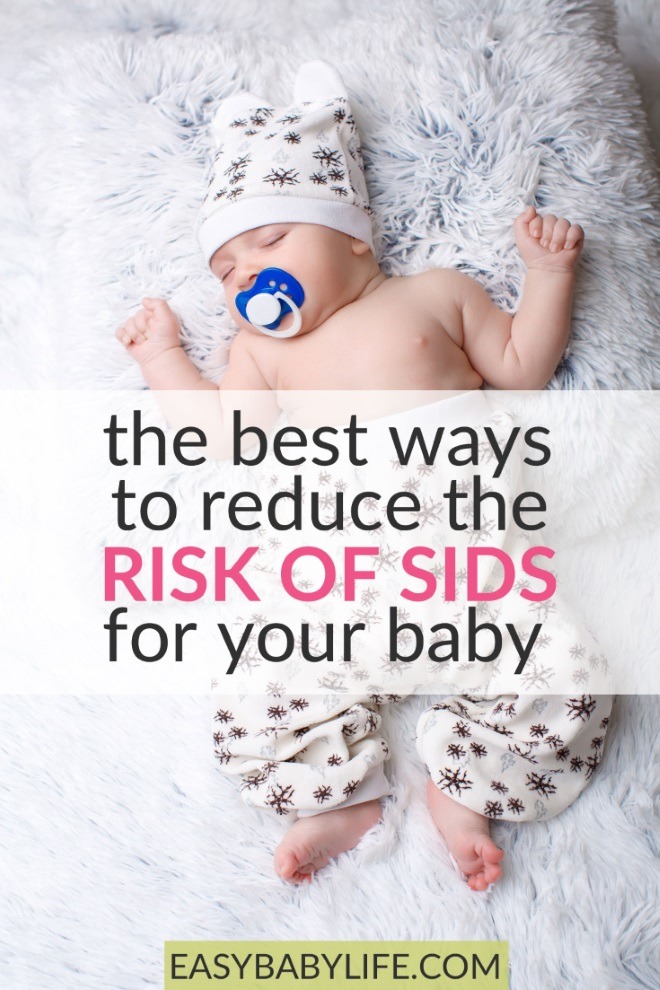
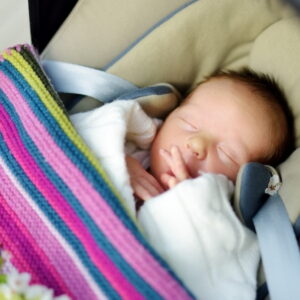
In addition to being pretty and cozy, creating a safe baby sleep environment is extremely important for your baby’s health and even survival. Your baby needs a sleeping environment that doesn’t make them overheated, roll over too easily to their belly, and is free from cigarette smoke or parents who have consumed alcohol. (To mention some risk factors…)
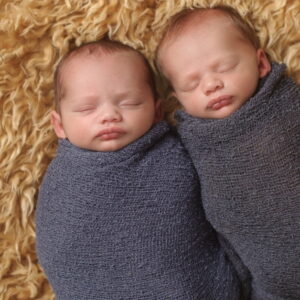
You have probably heard that there are very strong reasons to teach your baby to fall asleep and sleep on his or her back. And that is that the risk of Sudden Infant Death Syndrome (SIDS) or cot death is a lot lower with back sleeping.
Even if very few babies actually die from SIDS, most parents worry about it, of course.
But in addition to back sleeping, there’s quite a lot parents can do to minimize the risk of SIDS.
Prevent SIDS: Creating a Safe Baby Sleep Environment in 7 Steps
- Sleep position: On the back
- Pacifier in mouth
- Firm Mattress
- Be careful with blankets and stuffed animals
- Cool sleep temperature
- No smoking around the baby
- Breastfeeding
- Want more?
Sleep position: On the back
When the general recommendation came to let infants sleep on their backs, the incidence of SIDS fell everywhere. While there are other factors as well increasing the risk for SIDS, sleeping on the stomach is the highest risk factor for your baby. So choose the right sleep position – back sleeping – and let your baby get used to it.
If you’re worried that your baby will choke or get a flat head sleeping on his back, click here for answers.
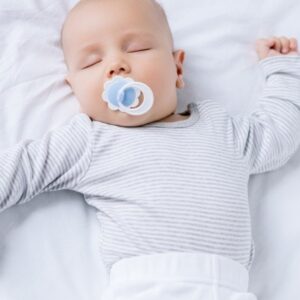
Pacifier in mouth
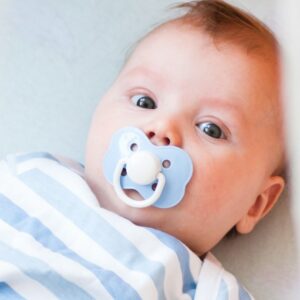
Recently it was found that a pacifier actually reduces the risk of SIDS. It is not clear why, but experts believe that the pacifier might make it easier for the baby to wake up, that breathing through the mouth is facilitated, and that babies turn less to sleep on their stomachs when using a pacifier.
If you need some tips on how to get your baby to accept a pacifier, click here.
Firm Mattress
A safe baby sleep environment includes a firm mattress since a firm mattress is good to avoid the risk of causing breathing problems in case your baby rolls over to his stomach.
Be careful with blankets and stuffed animals
Be very careful not to place blankets of stuffed animals into the crib in a way that the baby might pull them over his face.
Consider buying a sleeping bag, something that I’ve used and really liked to eliminate the risk that the baby covers its face with a blanket if it is too cold to sleep without some kind of bedding.
Cool sleep temperature
Make sure that your baby is not too warm and that they can move their body. This is important also in his or her stroller.
No smoking around the baby
Smoking both during pregnancy and near the baby after birth has a clear connection with SIDS. For example, smoking during pregnancy increases the risk for SIDS by 3 to 4 times and more the more the mother smokes.
Smoking while breastfeeding has a lot of negative effects on your baby; read more here.
Breastfeeding
Breastfeeding appears to lower the risk of SIDS. Different studies show somewhat contradictory results, but there seems to be a slightly lower risk among babies that are breastfed completely for at least four months.
Want more?
Well, these are the present guidelines to help parents reduce the risk of cot death as much as possible. But since research isn’t clear on the causes of SIDS, recommendations are likely to continue developing. Two fairly recent studies in 2007 and then again in 2015 indicated the same hearing impairment in all babies that had died from SIDS. Hence, it is possible in the future to identify babies that are at risk for SIDS using a simple hearing test.
For more facts about SIDS, click here.
Research References
- New Research Shows Link Between SIDS and Inner Ear Damage
- Infant Hearing Test Results May Predict Sudden Infant Death Syndrome
Feel free to share any thoughts on preventing SIDS and creating a safe baby sleep environment by leaving a comment below.
Paula Dennholt founded Easy Baby Life in 2006 and has been a passionate parenting and pregnancy writer since then. Her parenting approach and writing are based on studies in cognitive-behavioral models and therapy for children and her experience as a mother and stepmother. Life as a parent has convinced her of how crucial it is to put relationships before rules. She strongly believes in positive parenting and a science-based approach.
Paula cooperates with a team of pediatricians who assist in reviewing and writing articles.
Terrific article